Malaria is a life-threatening disease caused by a parasite that infects the Anopheles mosquito. You get malaria when bitten by an infective mosquito.
The period between the bite of an infected mosquito and the start of illness is usually 7 to 21 days. Anti-malaria (prophylactic) medicine can lengthen the period. It is extremely important that all suspected cases of malaria receive urgent medical attention.
A laboratory test confirms if malaria parasites are in your blood, however, this test takes time. Due to the urgency of obtaining a diagnosis, a screening test for malaria is helpful. This screening test does not require experienced personnel or equipment. The test results are immediately available.
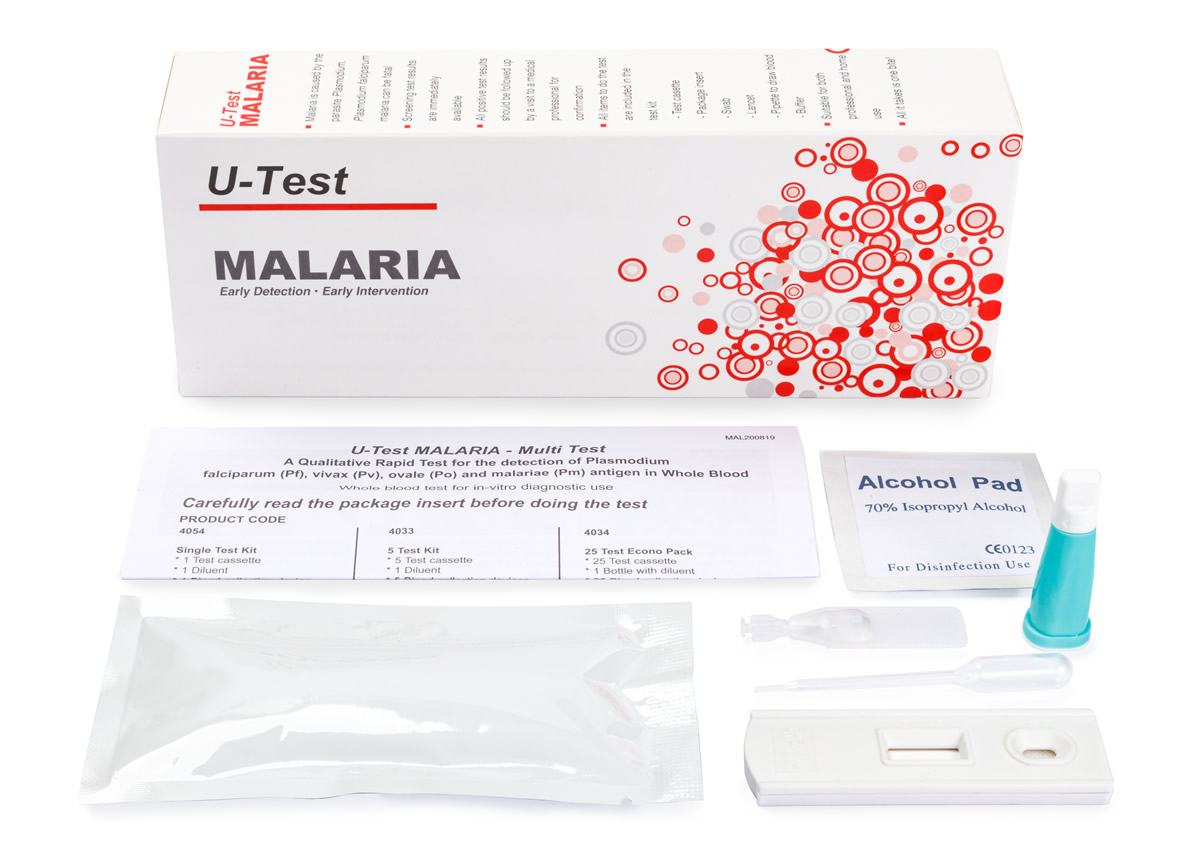
Malaria rapid diagnostic screening tests (RDTs) detect specific antigens produced by the parasites in the blood of people infected with malaria. Some malaria RDTs detect only one species (Plasmodium falciparum), while others, for example U-Test Malaria, identify multiple species (Plasmodium falciparum, vivax, malaria and ovale).
RDTs are relatively simple to perform and interpret. A finger-prick provides the blood needed for the test. It enables a reliable detection of malaria infections including in remote areas. Therefore, you can do the test anywhere and at any time. A doctor should confirm a positive result. Malaria is also a notifiable disease where a positive test result should be reported. It is important to remember that due to the long incubation period (7 to 21 days) before the start of the illness, that a negative test result does not completely rule out the possibility of malaria. If the symptoms continue, repeat the test after a few days.
Malaria: early detection, your best protection. U-Test Malaria is fast and easy to use. It gives a result within 15 to 30 minutes. The single test kit includes all the items needed to perform the test. It includes a finger pricker (lancet) and a sterile swab.